Silk, Seams, and Signal: The Quiet Power of Hosiery in Pin-Up Culture
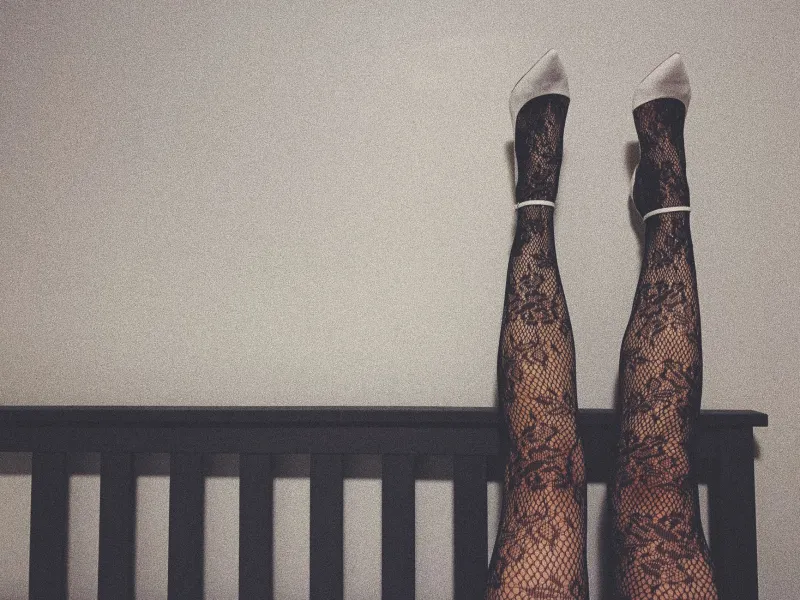
There's something almost unfair about how much work a pair of stockings can do. They're small. They're sheer. They cost less than a good lipstick. And yet, for anyone who has studied pin-up aesthetics seriously — or just spent time appreciating them — hosiery communicates in a frequency that almost nothing else in the wardrobe can match.
This isn't nostalgia talking. It's psychology, history, and a little bit of theater all tangled up in nylon and lace.
Where It Started: Practicality That Got Very Complicated
Before hosiery became a pin-up icon, it was just clothing. Women wore stockings because bare legs weren't socially acceptable in most public contexts. Silk was the gold standard before World War II — smooth, lustrous, and prohibitively expensive for most working women. When DuPont introduced nylon stockings in 1940, department stores were mobbed. Women lined up around the block. The demand was genuinely unprecedented.
Then the war happened, and nylon went to parachutes instead of legs. Women famously painted seam lines down the backs of their calves with eyebrow pencil and cocoa powder. That improvised seam — that drawn-on illusion of hosiery — tells you everything you need to know about how loaded this garment had become. It wasn't just warmth or modesty anymore. It was presentation. It was performance. It was worth faking.
The pin-up artists of the 1940s understood this instinctively. Alberto Vargas, Gil Elvgren, and their contemporaries painted stockings with almost obsessive attention — the way the seam curved over an ankle, the subtle shadow at the thigh where the stocking ended. The hosiery wasn't incidental. It was the punctuation mark on the whole image.
The Seam Line: Pin-Up's Most Intentional Detail
If you want to understand what makes seamed stockings so durable as a pin-up symbol, consider what the seam actually does visually. It draws a straight vertical line up the back of the leg, directing the eye, implying precision, suggesting that someone took the time to get dressed carefully. A crooked seam was a social faux pas in 1945. A perfectly straight one was a quiet flex.
Modern pin-up performers have inherited this grammar completely. Ask any creator who works seriously in the vintage aesthetic about their hosiery choices and you'll get a lecture, not a shrug. The seam signals era — late 1940s through early 1960s, specifically. The gauge of the stocking (how sheer versus opaque) signals mood. Fully fashioned stockings with a Cuban heel read differently than a barely-there nude stocking. Both are intentional. Neither is accidental.
This level of specificity is part of what separates pin-up as an aesthetic practice from costume play. The knowledge is real. The choices are deliberate.
Fishnet: The Rebel Cousin Who Became the Main Character
Seamed stockings carry the vintage credibility, but fishnet carries the attitude. And in contemporary pin-up spaces, attitude moves product.
Fishnet has a longer and stranger history than most people realize. Originally associated with circus performers and burlesque dancers in the late 19th century, it spent decades as shorthand for a specific kind of transgression. By the 1950s, it had migrated into the vocabulary of rock and roll. By the 1970s and 1980s, punk had claimed it. By the time the internet made visual self-presentation into a competitive sport, fishnet had accumulated so many cultural layers that wearing it became an act of deliberate citation.
Pin-up creators who work with fishnet are usually playing with that history consciously. Pair it with a structured bullet bra and a victory roll, and you're pulling the burlesque thread. Pair it with leather and a harder edge, and you're in rockabilly territory. The same garment, restyled, tells a completely different story. That's not an accident — that's craft.
The Psychology of the Almost-Revealed
Here's the thing about hosiery that makes it uniquely powerful in a visual medium: it covers while it reveals. A stocking simultaneously conceals the skin and draws attention to the leg. It creates a layer of mediation between the viewer and the body — and that layer is where imagination lives.
This is something the original pin-up artists understood at an almost scientific level. The images that became iconic weren't the most explicit. They were the most suggestive. The leg extended just so, the stocking catching the light, the hem of the skirt implying rather than confirming. Hosiery was a key tool in that visual grammar because it occupied the exact middle ground between dressed and undressed.
Contemporary creators working in the pin-up space navigate this same tension, often quite deliberately. A creator who understands her audience knows that the transition — the stocking top, the garter clip, the moment of transition from covered to uncovered — carries more charge than full exposure. The hosiery isn't hiding anything. It's directing everything.
Modern Performers, Ancient Tool
What's striking when you talk to today's pin-up creators about hosiery is how seriously they take the technical side. Brands matter. Denier matters. The difference between a 15-denier and a 40-denier stocking isn't just tactile — it's visual, and it photographs differently under different lighting conditions.
Many creators maintain what amounts to a specialized hosiery wardrobe, organized by era, mood, and shoot type. Vintage-reproduction brands like Secrets in Lace and What Katie Did have built genuine cult followings in the pin-up community precisely because they manufacture to historical specifications — the right seam placement, the correct heel shape, the authentic gauge.
This attention to detail signals something important about how pin-up culture functions at its best: it's not just aesthetic appreciation. It's material knowledge. The creators who build lasting audiences in this space tend to be the ones who can explain why something looks right, not just that it does.
Why It Still Works
In an era of athleisure and bare legs year-round, the deliberate choice to wear hosiery — especially seamed, vintage-style hosiery — reads as an act of intention. It says: I thought about this. I dressed for something.
That intentionality is, arguably, the core of pin-up's enduring appeal. The aesthetic has always been about presentation as a form of self-possession. The stocking, straight-seamed and carefully applied, is one of its most concentrated expressions.
Small garment. Big statement. That's been true since 1940, and nothing about the current moment suggests it's about to change.