Sign Nothing, Own Everything: How Savvy Pin-Up Performers Are Taking Back Their Likenesses
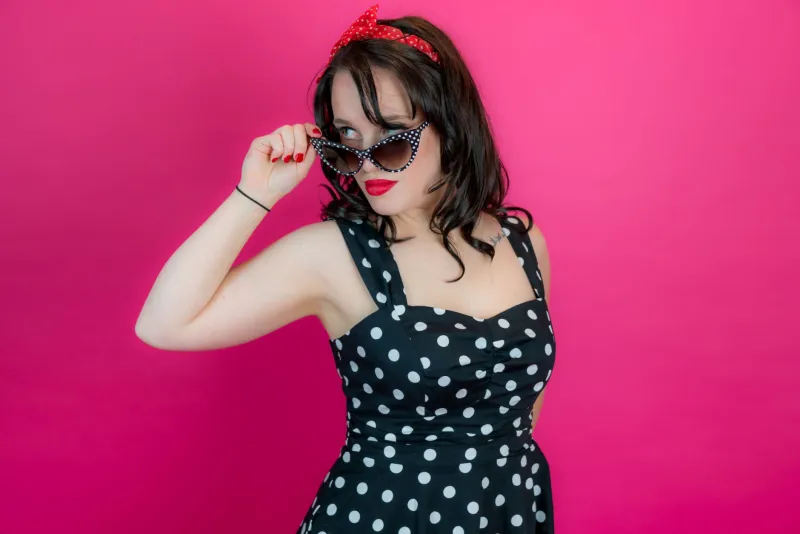
Photo: Too awesome for your mom... *, CC BY 2.0, via Wikimedia Commons
There's a photograph sitting in a studio archive somewhere in Los Angeles. Shot sometime in the late 1990s, it features a performer who spent three years building a name in the pin-up world — the vintage lingerie, the perfectly arched brow, the whole carefully constructed aesthetic. She got paid a flat session rate. The studio kept the negatives. That image has appeared in calendars, licensing deals, and merchandise for over two decades. She's seen almost none of it.
That story isn't unique. It's practically a tradition.
But here's what's changing: the performers coming up right now are not making that mistake. They've read the contracts, hired the lawyers, and in some cases, gone back and clawed old work out of the hands of agencies that thought they owned it forever. The business of pin-up imagery is undergoing a full restructuring, and the people who built it with their bodies and their brands are finally at the table.
The Contract Problem Nobody Used to Talk About
For most of pin-up's commercial history, the standard arrangement was pretty lopsided. A model showed up, signed a work-for-hire agreement or a broad rights transfer, and walked away with a check. The studio or publisher retained the copyright, controlled distribution, and collected licensing fees indefinitely. The performer's name might appear in small print — or not at all.
Work-for-hire clauses, in particular, were the industry's favorite tool. Under US copyright law, if a piece of creative work qualifies as work-for-hire, the hiring party — not the creator — is considered the legal author. For photographers and models who didn't understand what they were signing, these clauses quietly stripped them of any future claim to the work.
"Most people didn't have entertainment attorneys when they were starting out," says one veteran performer who now consults newer models on contract review. "You were just excited to work. You signed what they put in front of you."
The result was a generation of performers who built recognizable personas, grew loyal followings, and then watched their own images get licensed to third parties without a phone call or a royalty check.
Copyright Reclamation: The Legal Tool Most Performers Don't Know They Have
Here's the part that surprises a lot of people: US copyright law actually includes a reclamation provision. Under Section 203 of the Copyright Act, creators can terminate certain rights transfers after 35 years, regardless of what the original contract said. It was designed specifically to protect artists from bad early deals — and it applies to photography, too.
The catch is that the window to act is narrow, the paperwork is specific, and most people never knew the option existed. Entertainment attorneys who specialize in creator rights have started actively reaching out to performers whose early work is approaching that 35-year threshold, helping them file termination notices and reclaim control over archives that have been generating passive income for someone else for decades.
For pin-up performers specifically, this is significant. The vintage aesthetic means that older imagery often appreciates in cultural value rather than depreciating. A photograph from 1990 isn't obsolete — it might be more desirable now than it was when it was shot. Reclaiming those rights isn't just symbolic. It can mean real, ongoing revenue.
The Likeness Rights Conversation
Copyright is only part of the equation. Likeness rights — the legal protection over how someone's face, image, and identity are used commercially — operate separately, and they vary by state. California and New York have some of the strongest right-of-publicity protections in the country, which is relevant given how much of the pin-up industry has historically been concentrated in those markets.
Right-of-publicity claims have become a growing area of litigation in the adult and entertainment industries as AI-generated imagery and deepfake technology have made unauthorized use of a performer's likeness dramatically easier. Several high-profile cases have pushed studios and platforms to take these claims more seriously, and performers are increasingly aware that their face and persona carry legal weight, not just aesthetic value.
Some performers have begun formally registering their stage names and associated branding as trademarks — a move that creates an additional layer of protection and opens the door to licensing deals on their own terms rather than someone else's.
Building the Business Around Ownership
The legal groundwork matters, but it only pays off if there's a business structure to support it. The shift toward creator-owned distribution has made that structure far more accessible than it was even five years ago.
Direct-to-fan platforms have fundamentally changed the math. Instead of licensing imagery to a third party and collecting a fraction of the downstream revenue, performers can now sell directly to their audience — prints, digital archives, exclusive content subscriptions, merchandise — and keep the majority of what they earn. The platform takes a cut, but the creator retains ownership of the work and the relationship with the customer.
Several performers have gone further, forming their own LLCs or S-corps to house their intellectual property separately from their personal finances. This isn't just about taxes (though the tax advantages are real). It's about creating a structure where the brand can outlast any single platform, any algorithm change, any policy shift.
"Your likeness is an asset," one Los Angeles-based performer explained in a recent industry podcast. "Treat it like one. Put it in an entity. Protect it. License it on your terms."
The Archive as Revenue Stream
One of the most underappreciated opportunities in the pin-up space right now is the archive. Performers who've been working for years — sometimes decades — are sitting on catalogs of imagery that have never been fully monetized under their own control. With the right legal cleanup and a direct distribution channel, that archive can become a long-term income stream.
Limited-edition print sales. Digital collections. Tiered membership access. Collaborations with vintage-aesthetic brands who want authentic imagery rather than recreations. The commercial applications are broader than most performers initially realize, and the demand for genuinely vintage or vintage-adjacent content remains strong in a market oversaturated with generic digital photography.
The key is establishing clear chain of title — knowing exactly who owns what, getting any ambiguous rights resolved in writing, and then building the distribution infrastructure before the marketing push.
What the Next Generation Is Doing Differently
The performers entering the pin-up space now are operating with a level of business literacy that would have been unusual even ten years ago. They're asking for contract redlines before they show up to a shoot. They're consulting attorneys before signing anything. They're building their own websites and email lists from day one rather than relying entirely on third-party platforms.
They've watched what happened to the generation before them, and they've decided the aesthetic is worth preserving but the business model isn't.
The vintage glamour stays. The exploitative paperwork goes.
That's not a small shift. That's a full renegotiation of who the pin-up industry actually belongs to — and the answer, finally, is the people in the photographs.