Spray, Slay, Stay: Why Your Signature Scent Is the Most Underrated Tool in Your Pin-Up Arsenal
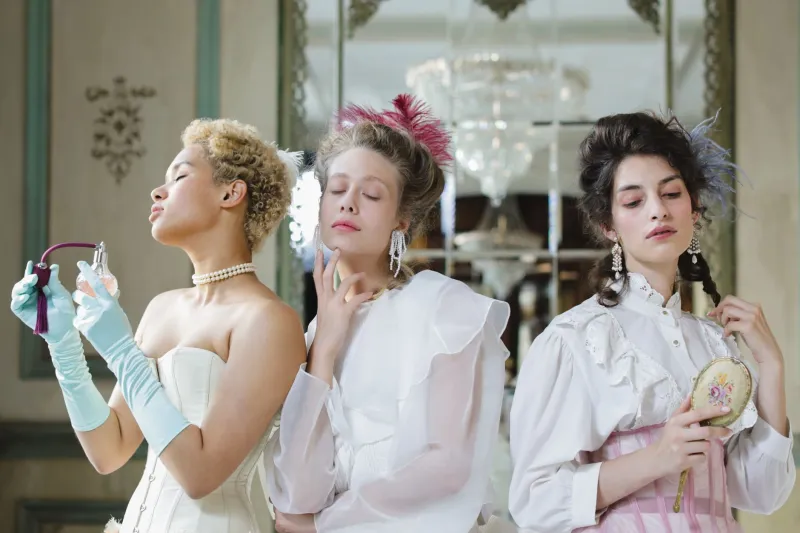
There's a moment — right before the lights hit, right before the camera clicks, right before the room shifts — where everything a performer has built about herself crystallizes. The hair is set. The seams are straight. The liner is sharp enough to cut glass. And then comes the final move: a slow, deliberate press of that atomizer, and a cloud of something warm, dark, or devastatingly floral settles over the skin like armor.
Fragrance in the pin-up world has always been more than perfume. It's identity in aerosol form.
But while a lot of the conversation around pin-up aesthetics tends to orbit the visual — the curls, the corsets, the contour — scent operates on a completely different frequency. It bypasses the eyes entirely and goes straight for the limbic system, the part of the brain responsible for memory and emotion. Which means a well-chosen fragrance doesn't just make you smell good. It makes people feel something before they've even processed what they're looking at.
Modern pin-up performers know this. And they're using it deliberately.
The Psychology Behind the Spritz
Olfactory memory is one of the most powerful and least discussed tools in a performer's kit. Neuroscience has been telling us for decades that scent is processed differently than any other sense — it takes a more direct route to emotional and memory centers than sight or sound ever could. What that means practically is that if you wear the same fragrance every time you perform, every time you shoot, every time you walk into a room you want to own, you're conditioning both yourself and your audience.
For the performer, it becomes a ritual trigger. Spray it on, and the brain knows what mode you're shifting into. It's the olfactory equivalent of putting on your stage persona — a chemical cue that tells your nervous system it's time to be that version of yourself. Confident. Magnetic. Fully in character.
For the audience? It's branding they don't even realize they're absorbing. They may not remember the exact shade of your lipstick three weeks after a show, but they will absolutely remember that smell. And the next time they catch a whiff of something similar at a bar or a department store counter, they're going to think of you.
Building a Scent Identity: It's Not One-Size-Fits-All
The days of defaulting to whatever classic feminine fragrance was on the drugstore shelf are long gone for serious performers. Today's pin-up entertainers treat scent selection the way a fashion designer approaches a capsule collection — with intention, with narrative, and with a clear sense of what story they want to tell.
A performer who leans into the classic 1950s bombshell aesthetic might reach for something powdery and warm — think iris, musk, and a whisper of vanilla — that echoes the mid-century femininity she's channeling. Someone working a darker, more noir-adjacent persona might layer a vetiver-heavy base under a blood orange top note, something that feels like a cigarette holder and a secret all at once. And performers whose brand lives in the maximalist, campy, over-the-top space of contemporary burlesque? They might go full tuberose and ylang-ylang, something so aggressively lush it practically has its own spotlight.
The point isn't to smell like everyone else in the genre. The point is to smell like you — or more precisely, like the version of you that you've decided to present to the world.
The Vintage Angle Without the Vintage Limitations
There's a temptation in pin-up culture to reach for the obvious historical touchstones when it comes to fragrance. Chanel No. 5. Shalimar. Arpège. And sure, there's a reason those classics keep getting referenced — they carry cultural weight, and they genuinely do evoke a specific era of glamour that pin-up aesthetics draw from constantly.
But here's the thing about vintage fragrance: it was designed for a different time, with different chemistry, and in some cases, different skin. Modern performers are increasingly blending old-school inspiration with contemporary formulations that wear better under hot stage lights, last longer through a multi-hour shoot, and interact with the skin in ways that feel current rather than like a museum piece.
Niche perfumers have become the go-to for performers who want that vintage warmth without smelling like their grandmother's medicine cabinet. Houses like Maison Margiela's Replica line, Commodity, and a growing wave of indie American perfumers are creating fragrances that feel retro without being literal about it. It's the olfactory equivalent of a vintage-inspired dress that was actually cut last year — the spirit is there, but the fit is modern.
Scent as Brand Currency
For performers who've built platforms — whether through live shows, content creation, or both — fragrance has started functioning as genuine brand currency. Some have gone so far as to develop signature scents in collaboration with indie perfumers, selling them as merchandise or releasing them as limited-edition items tied to tours or photo collections.
This isn't a new idea in entertainment broadly, but in the pin-up and burlesque space specifically, it represents a sophisticated understanding of how multisensory branding works. You're not just selling a visual aesthetic or a persona — you're selling an experience, and scent is one of the most direct ways to make that experience stick.
Think about what it means for a fan to own a bottle of something that smells like a performer they admire. Every time they wear it, they're invoking that energy. That's not merchandise. That's a relationship.
The Ritual of It
Beyond the branding and the neuroscience, there's something simpler and more human happening when a performer reaches for their signature scent before stepping into their world. It's ritual. It's the act of becoming.
Every great pin-up tradition has been built on transformation — the idea that you can step into a heightened version of yourself through a combination of intentional choices. The right dress. The right shoes. The right attitude. Fragrance belongs in that lineage, not as an afterthought but as a foundational element of the transformation process.
The performers who understand this aren't just smelling good. They're using scent the way a musician uses an opening chord — to signal to themselves and everyone around them that something worth paying attention to is about to happen.
So the next time you're building out your look, don't stop at the mirror. Close your eyes, reach for that bottle, and ask yourself: what do I want people to feel when I walk into the room?
Then spray accordingly.