Velvet Rooms and Vintage Light: How Luxury Hotels Got Seductive Again
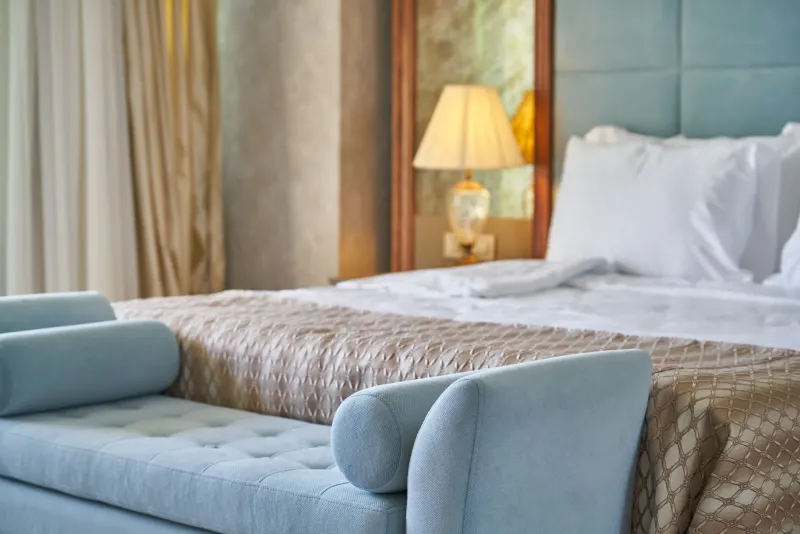
For about a decade, the dominant visual language of aspirational hotel design was aggressively clean. White walls. Concrete surfaces. Fixtures that looked like they'd been selected by someone who'd never experienced joy but had very strong opinions about negative space. The aesthetic was meant to signal sophistication. What it mostly communicated was that the room had been recently disinfected.
Something has shifted. Walk into a new luxury property in Nashville, New Orleans, or New York right now and you're increasingly likely to encounter something that feels less like a wellness retreat and more like a very expensive boudoir. Deep jewel tones. Curved furniture. Mirrors with the kind of warm, slightly diffused light that makes everyone look like they've just stepped out of a 1950s glamour shoot. The sterile era is losing ground, and what's replacing it borrows heavily — sometimes explicitly — from the visual vocabulary of mid-century pin-up culture.
The Aesthetic in Practice
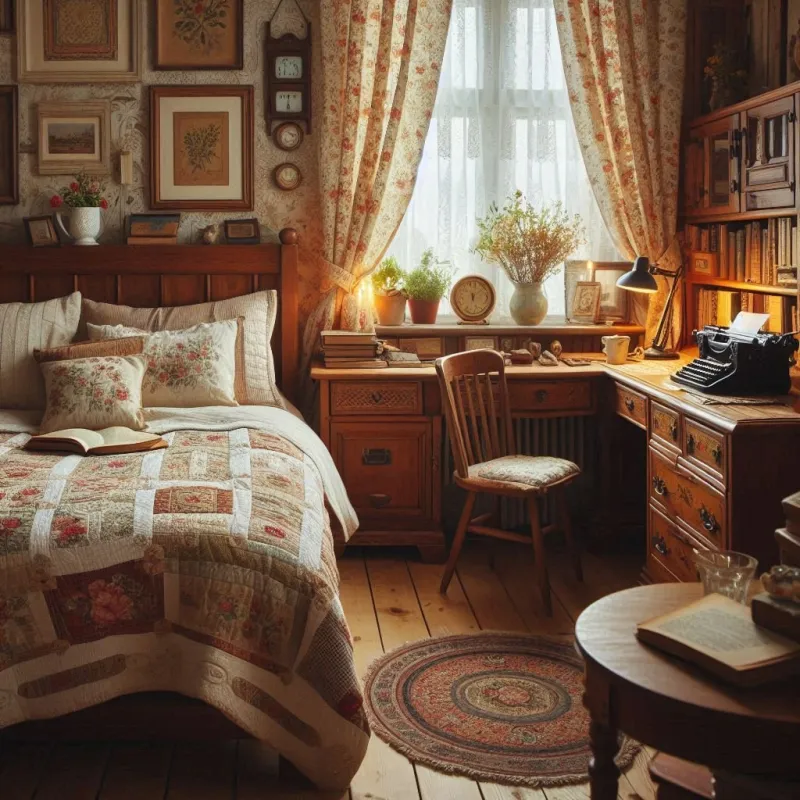
The details are specific and they're intentional. Velvet headboards in burgundy or forest green. Vanity lighting that uses warm-toned bulbs positioned at eye level rather than overhead. Vintage-style mirrors with ornate or brass frames. Wallpaper with bold, graphic patterns — florals, damasks, or abstract prints that would have felt at home in a 1940s Hollywood dressing room. Furniture with curves: rounded chairs, tufted ottomans, beds with upholstered frames that feel like they were designed for lounging rather than just sleeping.
The lighting deserves its own conversation because it's doing the most work. The shift away from overhead fluorescents and toward layered, warm, directional light sources is transforming how guests feel in these spaces. Good pin-up photography has always understood that light isn't just illumination — it's shaping. It creates mood, suggests intimacy, and makes the space feel like it was designed for a specific kind of pleasure. Hotel designers are catching on.
"The question we kept coming back to was: how does this room make you feel in your body?" says one interior designer working on boutique properties in the Southeast who asked to speak generally about the trend. "For too long, luxury hotel design made you feel like you were in a very expensive airport. We wanted rooms that made you feel like you were the most interesting thing in them."
Where the Influence Is Coming From
Design trends rarely emerge from a single source, but the through-line in this particular shift keeps pointing back to the same visual references: Old Hollywood glamour, mid-century pin-up imagery, and the aesthetic language of burlesque and cabaret spaces. These aren't accidental influences. They represent a specific philosophy about how designed environments can create desire — for the space itself, for the experience of being in it, for whoever you're sharing it with.
Pin-up imagery, at its best, was never really about the subject alone. It was about the atmosphere the subject inhabited. The rumpled satin sheet. The dressing table with its scattered powder and perfume bottles. The window light hitting at an angle that suggested late afternoon and no particular urgency. The environment was always part of the fantasy. Luxury hotel designers are now building those environments at scale.
The influence shows up differently depending on the property. Some go full vintage maximalism — think deep-red walls, framed mid-century prints, brass hardware everywhere, a bar cart that looks like it was inherited from someone fabulous. Others incorporate the aesthetic more subtly: a vanity nook with period-appropriate lighting, a velvet chaise in a corner that invites the kind of languid posing that nobody does in a room with a desk chair and a task lamp.
Photography and the Feedback Loop
There's a practical dimension to this trend that the hospitality industry is paying close attention to. Rooms that photograph beautifully — and specifically, rooms that make guests photograph beautifully — generate enormous amounts of organic social content. The warm light, the rich textures, the carefully considered color palettes of pin-up-influenced hotel design aren't just aesthetically pleasing in person. They're extraordinarily photogenic.
This isn't lost on hotel marketing teams. Properties are increasingly designing spaces with an awareness of how they'll read on a phone screen, which means understanding the same principles that pin-up photographers have always applied: warm light flatters, rich color creates drama, and a space with genuine visual texture gives the eye somewhere to go. The boudoir aesthetic photographs better than the minimalist one, full stop, and hotels are learning that lesson in real time through their guest-generated content metrics.
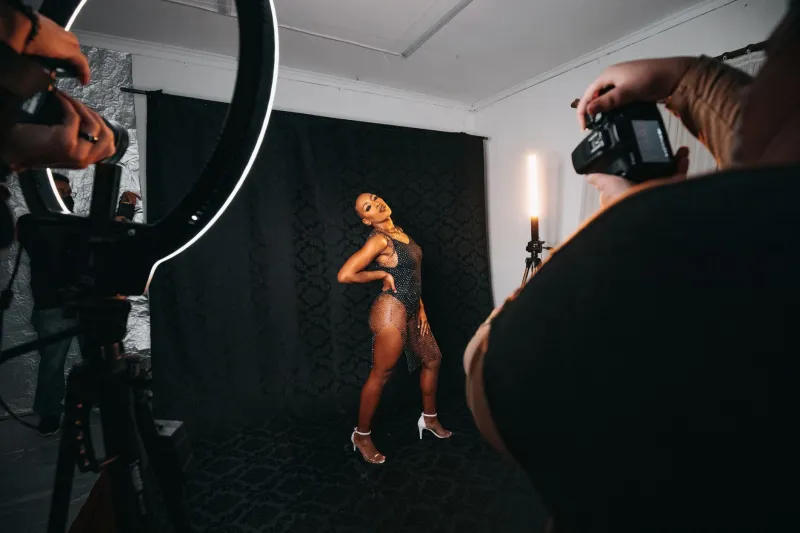
For content creators and photographers working in pin-up and vintage-glamour spaces, this shift represents a genuine opportunity. The number of hotel spaces that can serve as genuine pin-up backdrops — rather than requiring extensive set dressing to overcome aggressively neutral environments — is growing. A room with velvet wallcovering and a vintage-style vanity mirror is already doing half the work.
What It Says About Where Desire Lives Now
The deeper story here isn't really about interior design. It's about what people are craving in their leisure experiences and what kind of spaces they want to occupy when they're at their most themselves.
The sterile luxury hotel communicated a particular aspiration: clean, controlled, high-functioning. The boudoir-inflected luxury hotel communicates something different. It says: slow down. You're allowed to be sensual here. The space is designed for pleasure, not productivity. That's a meaningful shift in what "luxury" is being asked to mean.
Pin-up culture, at its core, has always been about the same reorientation — toward pleasure, toward the body, toward the particular kind of confidence that comes from inhabiting a space that was designed to make you feel beautiful. The fact that high-end hospitality is arriving at the same destination isn't a coincidence. It's a recognition that the aesthetic was onto something all along.
The velvet is staying. The warm light is staying. And honestly? The rooms have never looked better.