The Voice Behind the Veil: How Pin-Up Performers Are Making Audio the New Intimacy
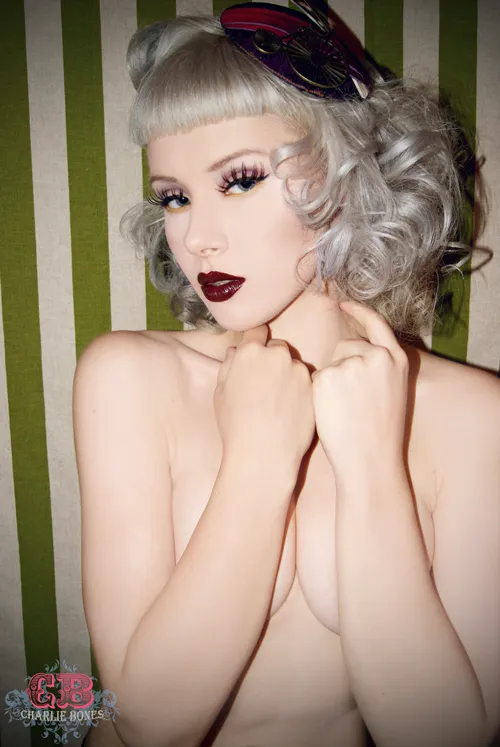
For most of its history, pin-up has been a silent art. The image was everything — the pose, the lighting, the careful construction of a moment that suggested without confirming. The women in those images didn't need to speak. The visual language was complete on its own terms.
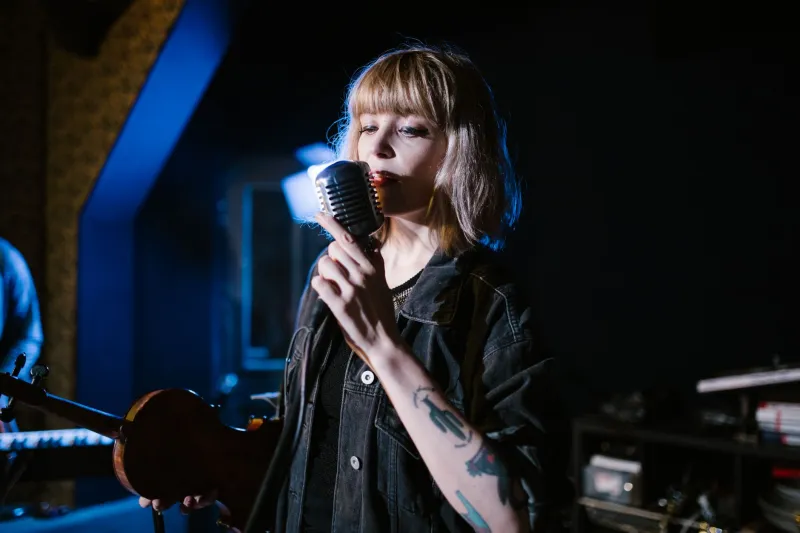
Something is changing. Across subscription platforms, podcast feeds, and audio-first apps, pin-up creators are discovering that adding a voice to the visual persona doesn't dilute the mystique — it deepens it. The results are reshaping how audiences connect with creators, and raising interesting questions about what intimacy actually means in a visual-first industry.
Why Audio Hits Differently
There's a neurological argument here that's worth making plainly: audio activates imagination in a way that visual content cannot. When you look at an image, the work of construction is done for you. When you listen to a voice, your brain fills in the rest. The listener becomes a co-creator of the experience, and that participation creates a different kind of investment.
For pin-up creators, this dynamic is particularly interesting. The aesthetic has always relied on the interplay between what's shown and what's suggested. Audio extends that principle into a new dimension. A voice that carries the right warmth, the right pacing, the right sense of self-possession doesn't need to be explicit to be intimate. It creates presence in a way that even the most beautifully composed photograph cannot fully replicate.
Creators who have moved into audio consistently describe the audience response as qualitatively different from what they see on visual content. Subscribers don't just engage — they attach. Messages reference specific phrases, vocal qualities, particular moments in a recording. The relationship feels less transactional and more personal, which has direct implications for retention and long-term audience loyalty.
ASMR and the Vintage Persona
The ASMR space was an unexpected early adopter of vintage pin-up aesthetics, and the combination makes a strange kind of sense when you think about it. Both ASMR and pin-up culture share a preoccupation with deliberateness — the careful, unhurried attention to sensory detail that characterizes both forms. An ASMR creator who has built a vintage persona is working with two aesthetic systems that reinforce each other.
The specific vocal textures that perform well in ASMR — low register, measured pace, close-mic intimacy — also happen to align with how classic pin-up imagery feels. Unhurried. Intentional. Constructed for pleasure rather than efficiency. Creators who have layered a vintage aesthetic onto ASMR content report that the combination attracts an audience that is unusually engaged with both the sound and the visual framing of their work.
There's also a period-authenticity angle that some creators have explored deliberately. Recording techniques, vocal styles, even the ambient sounds of a carefully constructed vintage environment — the scratch of a record, the click of a cigarette case, the clink of a glass — all contribute to a sonic world that parallels the visual world of the pin-up aesthetic. The immersion is total in a way that visual content alone rarely achieves.
Podcasting as Persona Extension
Beyond ASMR, a growing number of pin-up creators are using long-form audio — podcasts, recorded conversations, interview series — as a way to extend their persona into spaces that visual content can't reach.
The strategic logic is compelling. A podcast episode can surface in search results that a photo never would. It can be consumed during a commute, a workout, a morning routine — contexts where visual content is inaccessible. It creates a touchpoint with the audience that doesn't require the audience to be in a position to look at anything.
More importantly for the pin-up space specifically, a podcast creates context. It answers the question that visual content always raises but rarely answers: who is this person? The creators who have built the most durable followings in the pin-up space tend to be the ones whose audiences feel they know them — not just their aesthetic, but their perspective, their humor, their history. Long-form audio is one of the most efficient ways to create that sense of familiarity.
Several creators have built podcast formats specifically around the intersection of vintage culture and contemporary life — covering fashion history, photography technique, the economics of independent content creation, and conversations with other performers. These shows function simultaneously as audience-building tools, industry networking, and genuine creative expression. The pin-up aesthetic provides the frame; the conversation provides the depth.
The Power Dynamics of Voice
There's a subtler dimension to the audio shift that's worth examining: the power dynamics of voice are different from the power dynamics of image.
In visual content, the creator controls what is seen but cannot control how it's interpreted. The viewer brings their own projections to the image, and those projections may or may not align with what the creator intended. The image is fixed; the meaning is negotiable.
Voice is different. A voice has tone, rhythm, and intention built into it in ways that are harder to project over. When a creator speaks directly to an audience — whether in an intimate recording or a casual podcast — she is establishing the terms of the relationship in a more direct way than visual content allows. She is not just being looked at. She is speaking, and speaking implies a subject with her own interiority, her own perspective, her own agenda.
Many creators in the pin-up space describe audio content as the point at which their audience stopped treating them as an aesthetic object and started treating them as a person. That shift, they report, correlates directly with stronger loyalty, higher tips, longer subscription retention, and a qualitatively different quality of fan interaction.
Translating the Aesthetic to Sound
The practical question of how to translate pin-up's visual language into audio is one that creators are solving in real time, with varying approaches.
Some lean into the period-specific angle hard — vintage vocal affectations, period-accurate references, a sonic environment designed to evoke a specific decade. Others use the vintage aesthetic purely as a visual frame for their platform presence while allowing their audio work to be more contemporary and conversational, trusting that the audience will make the connection.
The most interesting experiments are happening at the intersection — creators who are developing a genuinely hybrid form, where the audio carries the same level of aesthetic intentionality as the visual work. The pacing is considered. The vocabulary is chosen. The sonic environment is constructed. The result sounds less like a podcast and more like a performance — not in the theatrical sense, but in the sense of something that has been made rather than simply recorded.
What Comes After the Photograph
Pin-up has survived and thrived through every technological shift in visual media because its core appeal — intentional, crafted, self-possessed sensuality — translates across formats. The move into audio is the latest iteration of that adaptability.
The voice, it turns out, was always part of the picture. It just took a microphone to let it speak.