Painted Ladies at 30,000 Feet: The Bomber Art That Made Pin-Up a Piece of American History
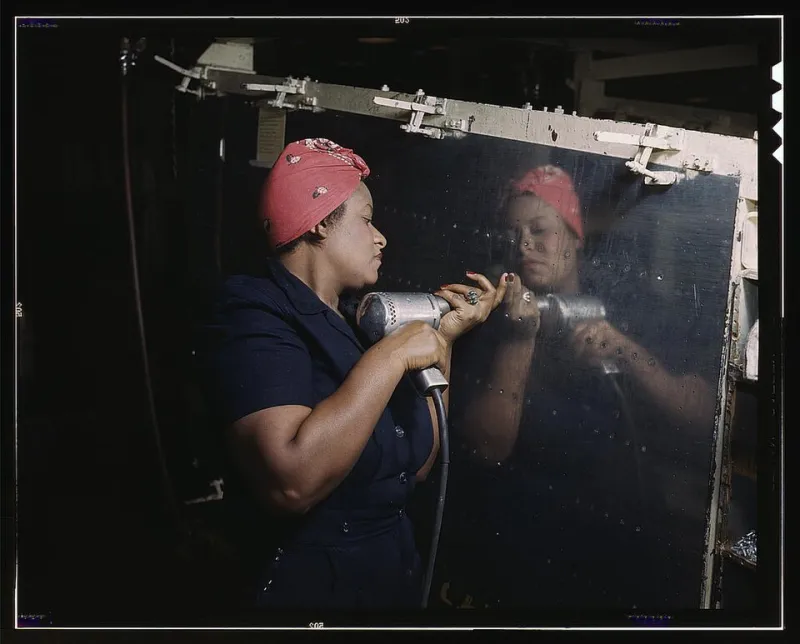
Photo: The Library of Congress from Washington, DC, United States, Public domain, via Wikimedia Commons
Somewhere in a hangar outside Chino, California, a restored WWII bomber wears a painting of a woman in a swimsuit on its nose. She's been there since 1944. She's been repainted, touched up, argued over, and photographed more times than most Hollywood stars of her era. And she's not alone — she's one of thousands.
Nose art is one of those strange, wonderful American inventions that nobody planned. It happened because young men facing terrifying odds wanted a piece of home, a joke, a lucky charm, a woman's face staring back at them from the metal. The pin-up didn't just decorate bombers. She became something bigger: a patriotic icon, a folk art tradition, and a preservation controversy that's still brewing today.
When the Air Corps Looked the Other Way
Officially, the military had rules about what could be painted on a multimillion-dollar aircraft. Unofficially, crew chiefs with a talent for illustration and a stash of pin-up calendars had free rein once the plane left the factory. The result was a golden age of unauthorized folk art.
Artists like Anthony Starace and the legendary crews at airbases across England and the Pacific turned bomber noses into galleries. The style borrowed heavily from George Petty and Alberto Vargas — the magazine illustrators whose work GIs carried in duffel bags across two oceans. A Petty girl on a calendar page became a Petty girl on a B-24, rendered in whatever paint the motor pool could spare.
What's fascinating from a craft perspective is how good much of it is. These weren't trained muralists. They were 22-year-olds with sable brushes and steady hands, working on curved aluminum in cold hangars. The best nose art holds up against commercial illustration of the era — confident linework, bold color blocking, a real eye for composition. War, it turns out, was a brutal art school.
From Flight Line to Gallery Wall
After 1945, most of those planes went to the smelter. The art went with them. What survived did so by accident — aircraft parked in desert boneyards, forgotten, then rediscovered decades later by preservationists who realized the paintings were as historically significant as the airframes.
Today, restored warbirds at the National Museum of the U.S. Air Force in Dayton, the Palm Springs Air Museum, and dozens of smaller collections carry their nose art like service medals. Museums have grappled with how to present it: original paint is treated as an artifact, sometimes left untouched even when modern eyes flinch at the more risqué examples. Reproduction aircraft, like the touring planes of the Commemorative Air Force, often feature freshly painted tributes in the classic style.
That's where the debate lives. Some preservationists argue original art should be preserved exactly as painted, warts and all, because history isn't a highlight reel. Others advocate for context — signage, exhibits, and education that explain the era without either sanitizing it or apologizing for it. Both camps agree on one thing: you don't paint over it. The planes earned their faces.
Why Airshow Crowds Still Gather
Go to EAA AirVenture in Oshkosh or any regional airshow with a warbird row, and watch where people stop. It's not just the engines. It's the noses. Kids ask what the painting means. Grandparents tell stories. The art is a conversation starter in a way a placard never is.
Part of it is pure visual appeal — a hand-painted figure on riveted aluminum is inherently striking. But part of it is what the pin-up represented to the men who painted her: luck, longing, humor in the face of long odds. When modern audiences look at that art, they're not just seeing an illustration. They're seeing the emotional survival kit of an entire generation, painted where everyone could see it.
That's the throughline we keep coming back to at Pin-Up 682: the imagery endures because it was never really about the image. It was about what people needed it to mean. On a bomber bound for Germany, that meant everything.
The Craft Lives On
A new generation of aviation artists keeps the tradition alive, painting reproduction nose art on restored warbirds, hot rods, and even custom motorcycles. The techniques haven't changed much — one-shot enamel, pinstriping brushes, a steady hand. If anything, the modern scene is more democratic: nose art today belongs to anyone who loves the aesthetic, the history, or the sheer audacity of painting a glamorous woman on a machine built for war.
The rocket pin-up, as it turns out, never really landed. She just changed aircraft.