Light Work: How Classic Studio Techniques Became the Most Powerful Tool in Modern Pin-Up Creation

Every filter eventually looks dated. Every editing trend peaks and then becomes a punchline. But go back and look at a George Hurrell photograph from 1935 — a shot of Joan Crawford or Jean Harlow, dramatically lit, all shadow and gleam — and it doesn't look old. It looks intentional. It looks like someone knew exactly what they were doing.
That's the difference between a technique and a trend. And right now, the most forward-thinking creators in the pin-up and adult content space are learning to tell those two things apart.
Why Lighting Became the Conversation
For a while, the race in content creation was about resolution. Higher megapixels, better phone cameras, crisper images. Then it shifted to editing — presets, filters, apps that could smooth and saturate and stylize with a single tap. Both of those races are essentially over, because the tools are now cheap and widely available. When everyone has access to the same filters, filters stop being a competitive advantage.
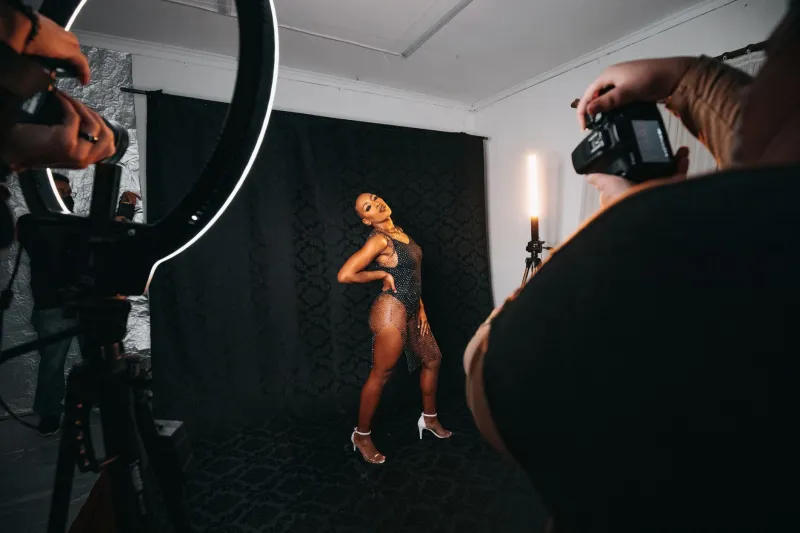
What can't be replicated with an app is the quality of light that hits a subject before the camera shutter ever opens. That's still a skill. That's still something you have to learn, practice, and refine. And for creators who have put in that work, it shows — immediately and unmistakably — in every image they produce.
The irony is that the techniques they're borrowing aren't new. They're nearly a century old. They come from the Hollywood studio system, from the portrait photographers who figured out how to make movie stars look like gods, and from a tradition of craft that prioritized beauty as a deliberate, technical achievement.
Key Light: Where the Story Starts
Every lighting setup begins with one decision: where does the primary light source go?
In classic studio photography, the key light was everything. It defined the face, created the shadows, established the mood. Photographers like Hurrell and Clarence Sinclair Bull were obsessive about it — moving their main light source by inches, testing and retesting until the shadow fell exactly where they wanted it.
For pin-up creators working today, understanding key light means understanding that the position of your main light source isn't a technical detail — it's a narrative choice. A key light placed high and slightly to one side creates the classic Rembrandt triangle: a small patch of light on the shadowed cheek that implies depth and drama. That's the setup that made 1940s portraits look like oil paintings. It still works. It will always work, because it's doing something fundamental with human facial geometry.
A key light placed directly in front of and level with the subject flattens the face, reduces shadows, and creates a bright, open look that reads as approachable and high-energy. That's a different story. Neither is wrong — but choosing between them without understanding what you're choosing is leaving narrative control on the table.
Diffusion: The Difference Between Harsh and Luminous
Hard light is dramatic. It's also unforgiving.
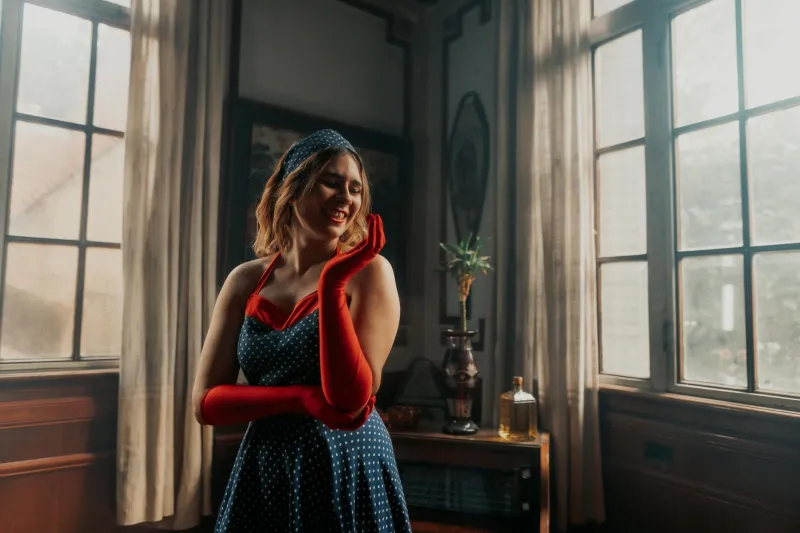
The classic studio solution was diffusion — softboxes, silks, bounced light — anything that spread the light source and made it wrap around the subject rather than hit it directly. Diffused light is what creates that luminous quality you see in the best vintage pin-up photography: the sense that the subject is almost glowing from within rather than being lit from outside.
For skin specifically, diffusion is transformative. It minimizes texture, softens transitions between highlight and shadow, and creates a quality of light that feels genuinely flattering without requiring any post-processing to achieve. This is the part that tends to surprise creators who make the switch: when the light is right, you need the filter less. The image comes out of the camera already looking like what you wanted.
Practically speaking, diffusion doesn't require expensive equipment. A large window on an overcast day is a giant diffusion panel. A white sheet between a lamp and a subject does the same job a professional silk does. The principle is what matters: make the light source larger relative to the subject, and the quality of light improves dramatically.
Color Temperature: The Invisible Mood Setter
This is the one most creators discover last, and it tends to be the one that changes everything.
Light has color. Daylight at noon is blue-white. Tungsten bulbs are warm and amber. The golden hour before sunset is orange and soft. Our eyes compensate for these differences automatically, but cameras record them literally — which means the color temperature of your light source is actively shaping the emotional register of your image whether you're thinking about it or not.
Vintage pin-up photography has a warmth that feels almost tactile. Part of that is the film stocks of the era. But a significant part of it is the tungsten lighting that dominated studio setups for decades — that warm, amber quality that makes skin tones look rich and inviting rather than clinical.
Creators who deliberately warm their light sources — using tungsten-balanced bulbs, warming gels, or simply shooting in the golden hour — are accessing that same emotional register. It reads as intimate. It reads as analog, even when it's digital. And in a content landscape that often looks cold and overexposed, warmth is a genuine differentiator.
Why Mastering Light Is a Business Decision
Here's the part that tends to land differently than the technical stuff.
Creators who control their lighting don't just make better images. They make images that are harder to replicate. The specific quality of light in a well-executed pin-up shoot — the drama of a Rembrandt setup, the luminosity of a diffused key light, the warmth of a tungsten-balanced color temperature — is a signature. It's recognizable. It builds brand identity in a way that filters and presets never can, because filters are public and lighting setups are personal.
That signature translates directly into audience loyalty, into subscription retention, into the kind of reputation that generates income independent of platform algorithms. You can't filter your way to that. You can't edit your way to that.
You have to learn the light.
The women who lit up Old Hollywood knew it. The photographers who made them immortal knew it. And the smartest creators working in pin-up today are figuring out that the most modern thing they can do is go back to school on a technique that's been working since before their grandmothers were born.
Some tools don't become obsolete. They just wait to be rediscovered.