Red Lips and Red Flags: What America's Pin-Up Obsession Actually Says About Us Right Now
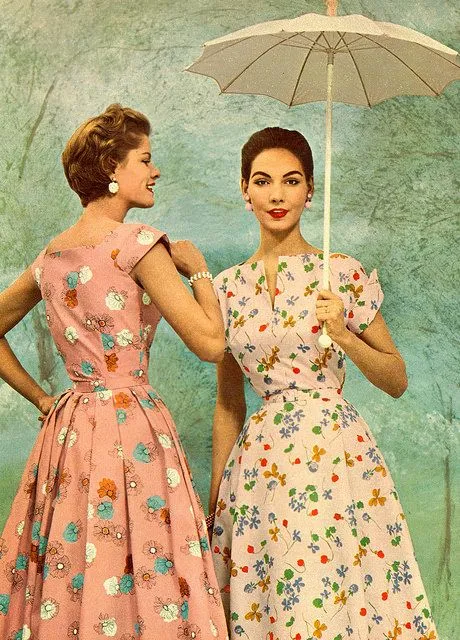
Photo: vintage 1950s pin-up style woman retro fashion glamour nostalgic Americana aesthetic, via i.pinimg.com
The Fantasy That Won't Quit
Something strange keeps happening in American culture. We live in an era of unprecedented technological change, political turbulence, and near-constant anxiety about the future — and yet a significant slice of the population is spending serious time, money, and creative energy recreating the visual language of a postwar decade that ended before most of their parents were born.
Pin-up aesthetics have never really gone away, but their current moment feels different. It's not nostalgia in the passive sense — not just a fondness for old movies or vintage diners. It's active, participatory, and increasingly political. People are building identities around this stuff. And that's worth examining honestly.
What does it mean that in 2024, with everything happening in this country, the red lip and the cinched waist still carry this much cultural weight? The answer, it turns out, is complicated in ways that are genuinely interesting.
Nostalgia as a Stress Response
Psychologists have spent a fair amount of time studying why nostalgia spikes during periods of social anxiety, and the findings aren't particularly surprising: when the present feels unstable or threatening, the past offers a kind of psychological shelter. It's not that people actually believe the 1950s were better — most people engaging with pin-up culture are smart enough to know that era came with serious costs for women, for people of color, for anyone who didn't fit the narrow template of acceptable American life.
But the aesthetic of that era — the bold graphic quality of it, the sense that beauty had clear rules and those rules could be mastered — offers something that the current moment often doesn't: legibility. In a cultural landscape where everything feels contested and provisional, the vintage pin-up image is coherent. It knows what it is.
That coherence is part of the appeal, and it's worth naming without apologizing for it. Wanting things to make visual sense isn't the same as wanting to return to a world of enforced domesticity and systemic inequality. Most people engaging with pin-up culture are capable of holding both things at once — the pleasure of the aesthetic and the awareness of its history.
The Reclamation Argument and Its Limits
The dominant framework for understanding contemporary pin-up culture, especially among its practitioners, is reclamation. The argument goes something like this: pin-up imagery was originally produced by and for men, framing women as objects of a particular male fantasy. When women take control of that imagery — producing it themselves, on their own terms, for their own audiences — they transform it from something done to them into something they choose.
This argument has real merit. The shift in who controls pin-up content — from studio photographers and magazine publishers to individual creators managing their own platforms and revenue streams — is genuinely significant. The economics of the current digital landscape mean that a woman performing a vintage pin-up aesthetic today is far more likely to be her own boss than her 1950s counterpart ever could have been.
But reclamation arguments can also flatten complexity in ways that aren't always honest. Choosing to perform a particular kind of femininity doesn't automatically neutralize the cultural forces that made that performance legible as desirable in the first place. The male gaze didn't disappear because women picked up the camera. It adapted. And some of the same beauty standards that defined the original pin-up ideal — the emphasis on a specific body type, the prioritization of a particular kind of youthful, white, conventionally feminine presentation — still structure a lot of contemporary pin-up content, even when the creator thinks of herself as operating outside those constraints.
None of this means the reclamation project is worthless. It means it's ongoing and unfinished, which is actually more interesting than a clean victory narrative.
What Authenticity Has to Do With Any of This
One of the defining anxieties of contemporary American life is authenticity — the fear that everything is performed, curated, and hollow. Social media has intensified this to a near-pathological degree. We scroll through feeds full of people presenting carefully constructed versions of themselves and simultaneously hunger for something that feels real.
Pin-up culture, paradoxically, offers a kind of relief from this anxiety precisely because it's openly constructed. The vintage aesthetic doesn't pretend to be natural. The victory rolls took an hour. The makeup is a mask and everyone knows it. The whole thing is theater, and the theatricality is the point.
There's something genuinely freeing about an aesthetic that doesn't ask you to look effortless. The effort is part of the art. And in a culture that increasingly rewards the illusion of spontaneity, choosing a form of self-presentation that celebrates craft and deliberateness can feel like a quiet act of resistance.
Gender in the Rearview Mirror
The current wave of pin-up enthusiasm is also happening in a moment of significant renegotiation around gender — and the relationship between those two things isn't accidental. As conversations about femininity, gender identity, and bodily autonomy have become more complex and more politically charged, some people are finding that retro aesthetics offer a space to engage with femininity on their own terms.
This plays out in unexpected ways. The contemporary pin-up community includes a significant number of queer and trans creators who have found in vintage glamour a set of tools for constructing femininity that feels chosen rather than imposed. The aesthetic's very artificiality — the fact that it's clearly a costume — makes it useful for people whose relationship to gender has always involved a degree of conscious construction.
It also includes people who are deeply traditional in their values and find in pin-up culture a celebration of a femininity they feel is under threat. The same aesthetic is doing very different political work for different people, which is either a sign of its richness or its incoherence, depending on your perspective.
What We Talk About When We Talk About the Past
America has always had a complicated relationship with its own history — a tendency to mythologize certain eras while conveniently editing out the parts that don't fit the fantasy. The postwar period is one of the most aggressively mythologized in the national memory, and pin-up culture is one of the places where that mythology lives most vividly.
Engaging honestly with pin-up aesthetics in 2024 means holding the fantasy and the history in the same frame. It means enjoying the red lip without pretending the world that produced it was simpler or kinder than it actually was. It means recognizing that nostalgia is a feeling, not a political program, and that the past it reaches for never quite existed in the first place.
What we're really doing, when we reach for the bullet bra and the cat eye, is trying to make sense of right now. The vintage aesthetic is just the language we're using to do it.