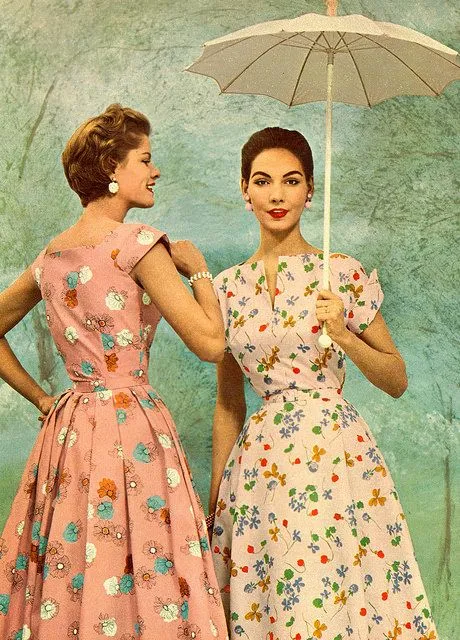
Runway Confessions: When Couture Decided Pin-Up Was the Most Radical Thing Left
There's a moment in every fashion cycle when the industry gets tired of its own restraint. Minimalism runs its course. Clean lines start feeling like silence. And then — almost on cue — someone sends a model down a runway in a structured satin corset, seamed stockings, and a look that says I know exactly what I'm doing, and the whole room leans forward.
That moment has been happening a lot lately. And it didn't come out of nowhere.
The Archives Were Always There
Pin-up aesthetics didn't suddenly appear in high fashion because a trend forecaster had a dream. The visual language — the hourglass silhouette, the deliberate pose, the garment that frames rather than conceals — has been sitting in fashion's peripheral vision for decades, occasionally acknowledged and quickly dismissed as too commercial, too obvious, too much.
What changed is the cultural appetite. Consumers who came of age scrolling through vintage photography accounts, who grew up watching burlesque documentaries and discovering Bettie Page on their own terms, started showing up to luxury retail with very specific ideas about what they found beautiful. They weren't interested in fashion that apologized for itself.
Dolce & Gabbana figured this out early and leaned in hard. Their Sicily-soaked campaigns have always trafficked in a kind of operatic femininity that owes a serious debt to 1950s pin-up iconography — the cinched waists, the corseted bodices, the unambiguous celebration of curves as architecture. Critics called it retrogressive. Customers called it a waiting list.
Agent Provocateur and the Luxury of Directness
If one brand has functioned as the clearest bridge between underground adult aesthetics and the high-fashion establishment, it's Agent Provocateur. Founded in London but deeply embedded in American luxury consciousness, AP has spent thirty years doing something the fashion world often struggles with: being completely honest about what lingerie is for.
Their campaigns — shot with cinematic precision, styled with vintage-inflected drama — read less like underwear advertisements and more like pin-up editorial elevated to gallery quality. The brand understood something that took mainstream fashion much longer to accept: that the erotic and the artistic are not competing categories. They're the same category, approached from different angles.
Fashion historians have noted that AP's visual DNA pulls directly from the golden age of American pin-up illustration — the Gil Elvgren palette, the Alberto Vargas sense of idealized movement, the understanding that a woman who knows she's being looked at and looks back is infinitely more compelling than one who pretends not to notice.
The Emerging Designers Doing It Differently
Beyond the established houses, a wave of independent American designers is approaching the pin-up inheritance with more nuance and more noise. Brands operating out of Brooklyn, Los Angeles, and Chicago are building collections that treat vintage glamour as a starting point rather than a destination.
The conversation in these studios tends to be less about recreation and more about translation. What does a 1940s bullet bra silhouette mean when it's constructed from sustainable materials and sized inclusively? What happens when the pin-up pose — historically choreographed by male photographers for male audiences — gets reclaimed by the model herself, who's also the creative director, the photographer, and the business owner?
The answer, consistently, is that it gets more interesting. The sensuality doesn't diminish. It intensifies, because it's no longer performing for permission.
Why Luxury Consumers Are Choosing Unapologetic
There's a market psychology piece here that fashion economists have started paying attention to. Across income brackets, American consumers are expressing fatigue with what one might call aspirational neutrality — the idea that luxury should signal sophistication through restraint, through beige, through the absence of anything that might read as trying too hard.
Pin-up, by contrast, is always trying. It tries with full commitment and zero embarrassment, and that quality — that unironic investment in glamour as a worthwhile project — is reading as authentic in a way that studied minimalism no longer does.
When a woman drops serious money on a structured gown with a sweetheart neckline and a silhouette that references 1955 without apologizing for it, she's not being nostalgic. She's making a statement about what she values. She values being seen. She values craft. She values the idea that getting dressed is a creative act with stakes.
Luxury brands that understand this are thriving. Brands that keep waiting for the pin-up moment to pass are watching their most interesting customers walk toward the designers who got there first.
The Cultural Crossover Is Already Complete
It's worth saying plainly: the boundary between adult entertainment aesthetics and mainstream couture has not been gradually eroding. It collapsed. The visual grammar of classic pin-up — the grammar that defined the golden age of American adult imagery — is now the grammar of a Vogue Italia spread, a Met Gala look, a luxury fragrance campaign.
That's not a scandal. It's a correction. Pin-up was always sophisticated. The culture just needed a few decades to catch up with what the artists already knew.
At Pin-Up 682, we've been watching this crossover from a front-row seat, and what strikes us most isn't the surprise of it — it's how inevitable it feels in retrospect. Desire is not a subculture. It's the culture. Fashion is finally dressing the part.