Swipe Left on Swipe Culture: What Vintage Flirtation Still Gets Right
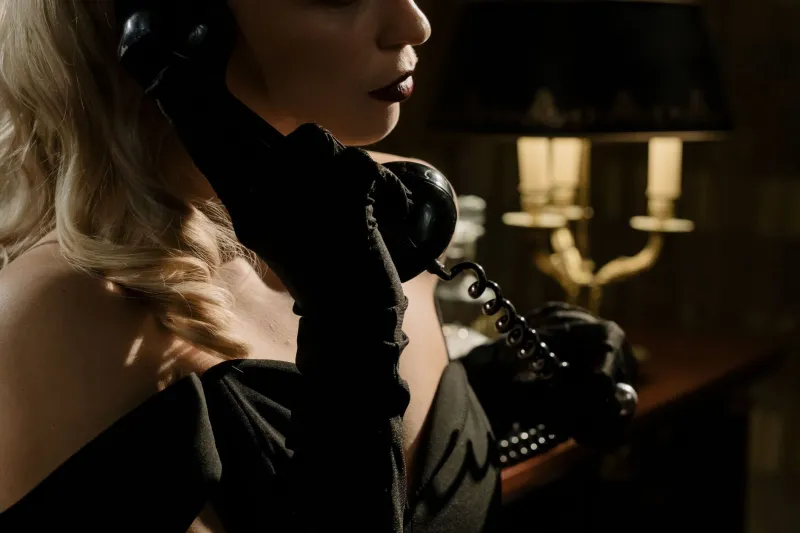
There's a moment in a lot of mid-century pin-up photographs that gets overlooked in favor of the obvious stuff — the curves, the lingerie, the perfectly arched brow. It's the pause. That split second where the subject seems to know you're watching and hasn't decided yet whether to let you keep looking. That pause is doing more work than any dating profile bio ever written.
Modern dating culture handed us infinite options and somehow made connection feel rarer. Swipe right, swipe left, match, ghost, repeat. We've optimized for volume and accidentally eliminated the thing that actually creates attraction: tension. Real, slow-building, make-you-think-about-it-later tension. The women who built careers on being desired in the 1940s and 1950s understood this intuitively. And the lessons they left behind are more relevant right now than any algorithm update.
The Look That Did All the Heavy Lifting
Eye contact is almost embarrassingly simple as a concept. And yet it's become genuinely radical in an era where most first interactions happen through a screen. Pin-up performers — from the studio-shot glamour queens to the burlesque stage veterans — treated the gaze as a whole conversation. Not a stare. Not a glance. A held look that communicated interest while maintaining composure.
The difference matters. A stare is aggressive. A glance is dismissible. But a sustained, warm, slightly-amused look? That's an invitation. It says I see you and I'm not in a hurry. That unhurried quality is the thing dating apps structurally cannot replicate. Everything about swipe culture is built around speed — snap judgments, quick decisions, on to the next one. Vintage flirtation was built around making someone wait.
Practical application: the next time you're in a room with someone interesting, try holding eye contact a beat longer than feels comfortable. Not forever. Just one extra second. It's disarming in the best possible way, and it costs nothing.
Strategic Vulnerability vs. Oversharing
There's a version of openness that modern dating culture celebrates that actually works against intimacy. The pressure to be an open book on a first date — to signal emotional availability by disclosing everything immediately — often kills mystery before desire has a chance to root itself.
Pin-up culture operated on a different principle. The performers who became icons weren't closed off or cold. They were selectively open. A glimpse of something real, offered deliberately, is infinitely more compelling than a full disclosure. Think about how the best pin-up imagery works: you're shown enough to want more. The aesthetic itself is a masterclass in the power of the partial reveal.
In dating terms, this translates to the difference between sharing something genuine and personal — a real opinion, a small confession, a moment of actual feeling — versus reciting your entire emotional history before the appetizers arrive. Vulnerability is magnetic when it's chosen. When it's reflexive, it reads more like anxiety than openness.
Mystery Isn't Manipulation — It's Maintenance
Somewhere along the way, the concept of keeping a little mystery got rebranded as game-playing. That's a mistake worth correcting. The pin-up performers who maintained long careers — the ones who became legends rather than just faces — understood that mystery isn't about withholding affection. It's about not exhausting the full story before someone's had a chance to become genuinely curious about it.
Doris Day didn't become an icon by making herself completely knowable in every interview. Bettie Page didn't become the most photographed woman in America by giving away every angle at once. The intrigue was part of the offering. And intrigue, it turns out, is something you can cultivate deliberately without being dishonest.
Keeping a little mystery in modern dating looks like: not texting back within thirty seconds every single time, having interests and a life that exist outside of whoever you're seeing, not narrating every thought and feeling in real time. It's not coldness. It's the difference between a door that's slightly ajar and one that's been left wide open. The slightly ajar one makes you want to push it.
The Slow Build Is the Whole Point
Here's the thing that swipe culture fundamentally misunderstands about attraction: it isn't instant. Or rather, the spark might be instant, but desire — the kind that actually sustains something — builds. It accumulates through small moments, repeated encounters, the slow revelation of a person.
Pin-up as an aesthetic form understood this. The best pin-up imagery wasn't designed to hit you once and disappear. It was designed to reward a second look. And a third. The composition, the lighting, the expression — there was always something else to notice. That philosophy applies directly to how you present yourself in early dating: be interesting in layers. Don't front-load everything.
This isn't a strategy for deception. It's a strategy for actually being seen. When you offer everything at once, people don't know where to look. When you offer something that rewards attention, they keep paying it.
What the Apps Can't Sell You
Dating apps have gotten very good at one thing: creating the feeling of possibility. What they've never figured out is how to manufacture the feeling of presence. That electric sense of being in a room with someone who is fully, deliberately there — who has chosen to be interesting and is watching to see if you notice.
The vintage pin-up playbook isn't about going back to some idealized past. It's about recovering techniques that worked because they understood human attention — how it's captured, how it's held, how it deepens into something real. Eye contact. Patience. Selective vulnerability. A little mystery. The slow build.
None of that requires a subscription. None of it requires a profile photo or a bio or a carefully curated collection of your best angles. It just requires showing up, paying attention, and trusting that being genuinely compelling is more effective than being immediately available.
The women who built careers on desire figured that out decades ago. The algorithm is still catching up.