Bottled Desire: The Vintage Fragrances That Built Pin-Up Mystique — and Why They're Back
There's a moment every seasoned pin-up performer knows well. The costume is on, the victory rolls are pinned, the lipstick is set. And then comes the final ritual — the spritz. Two or three pulls of the atomizer, wrist to throat, and something shifts. The character arrives. Whatever magic mid-century glamour is supposed to conjure, it doesn't fully land until the scent does.
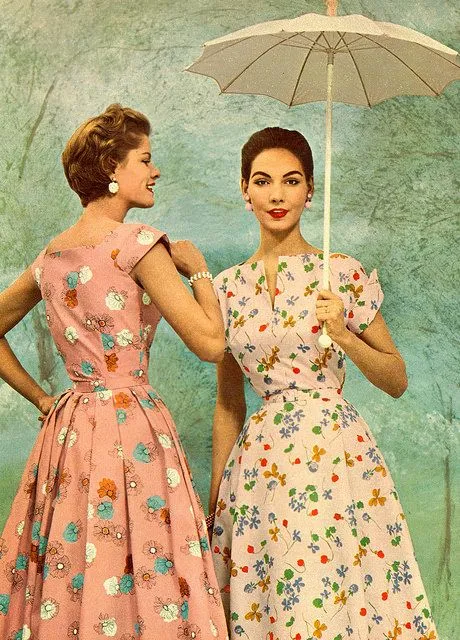
Fragrance was never an afterthought in classic pin-up culture. It was architecture. The women who defined the aesthetic — from the Vargas girls painted across wartime calendars to the Playmates photographed under Hugh Hefner's editorial eye — understood that desire is a multisensory experience. You could look the part perfectly and still leave a room forgettable. But walk out trailing Chanel No. 5 or a cloud of Lanvin's Arpège? That lingered. Literally.
Right now, in 2024, vintage fragrances are staging one of the more quietly radical comebacks in American beauty culture. And the pin-up community is leading the charge.
Why Scent Was the Original Personal Brand
The mid-century fragrance market wasn't subtle about what it was selling. Perfume advertisements from the 1940s and '50s leaned hard into aspiration and seduction — a woman wearing the right scent wasn't just attractive, she was transformative. She stopped traffic. She made men forget their own names. The marketing was over-the-top by modern standards, but it mapped perfectly onto the pin-up aesthetic, which was never really about restraint.
What made those fragrances so effective as identity tools was their staying power — not just on skin, but in cultural memory. Chanel No. 5, launched in 1921 but cemented as the definitive glamour scent through Marilyn Monroe's famous "just a few drops" quip in 1952, became shorthand for a specific kind of femininity. Bold. Unapologetic. Expensive-smelling even when you weren't. Guerlain's Shalimar, with its powdery vanilla-and-civet backbone, was the choice for women who wanted to signal something a little more dangerous. And Estée Lauder's Youth Dew — technically a bath oil, but worn as a perfume by half of America — brought heavy oriental warmth into the mainstream in a way that felt almost transgressive for its era.
These weren't just nice smells. They were olfactory personas. And pin-up culture, built on the idea that every detail of presentation is intentional, absorbed that logic completely.
The Modern Revival: What Today's Performers Are Reaching For
Walk through the dressing rooms at any major pin-up convention — Viva Las Vegas, the Lonestar Round-Up in Austin, or any of the regional burlesque festivals that dot the US calendar — and you'll catch something interesting in the air. Powder. Musk. Aldehydes. The unmistakable warm-amber base of vintage-formula perfumery.
A lot of today's pin-up performers are actively hunting vintage fragrance, and not just for aesthetic cosplay. There's a genuine belief in the community that older formulations hit differently — that pre-IFRA-restriction perfumes (the International Fragrance Association began tightening ingredient rules in the early 2000s) had a complexity and longevity that modern reformulations can't quite match. Oakmoss, civet, certain musks — ingredients that gave mid-century fragrances their distinctive "skin" quality — have been heavily restricted or eliminated entirely. Serious collectors haunt eBay, Etsy vintage sellers, and estate sales hunting sealed bottles of original Mitsouko or pre-reformulation Miss Dior.
For performers who build their entire persona around period authenticity, using a current bottle of something that used to be iconic can feel like cheating. The scent is part of the character, and the character demands accuracy.
But it's not all archival obsession. A parallel trend is pulling in the opposite direction — contemporary niche perfume houses that deliberately evoke mid-century glamour with modern ingredients. Houses like Commodity, Imaginary Authors, and especially the cult-favorite Zoologist and Bogue Profumo have attracted pin-up enthusiasts who want the feeling of vintage without the fragility of actual vintage stock. The aesthetic is the same: big, confident, unapologetically present. Just built for 2024 skin chemistry.
The Olfactory Branding Playbook
Here's what the mid-century glamour industry understood that a lot of modern beauty branding forgets: scent creates memory in a way that visuals simply cannot. You can see a photograph and appreciate it. But smell triggers the limbic system directly — it bypasses the analytical brain almost entirely and lands straight in the emotional core. A woman who wears a consistent signature scent isn't just smelling good. She's imprinting herself on everyone she meets in a way that no visual cue can replicate.
The savviest pin-up performers working today have picked this up and run with it. Treating fragrance as a core part of their brand — mentioning their signature scent in content, sometimes even in product partnerships — creates an intimacy that photographs alone can't manufacture. It invites the audience into a sensory world, even when they're only experiencing it through a screen. The suggestion of scent, described vividly, does real psychological work.
This is, in a very direct line, what Marilyn Monroe was doing when she made that offhand comment about Chanel No. 5. She wasn't just answering a question about pajamas. She was building a mythology. She was making every person who smelled that fragrance afterward think of her.
Powder, Musk, and the Question of Authenticity
There's a genuine debate in fragrance-forward corners of the pin-up community about what counts as "authentic" vintage scent. Purists argue that nothing replicates the experience of wearing an original 1950s formulation — the projection, the dry-down, the way those older ingredients interacted with natural skin chemistry in ways that modern synthetics simply don't. Pragmatists point out that hunting sealed vintage stock is expensive, unreliable, and occasionally hazardous (perfume does expire, and some vintage bottles contain ingredients that have since been flagged as allergens).
The middle path, which a lot of performers seem to be landing on, involves a combination: a few treasured vintage bottles reserved for special shoots or performances, and a reliable modern alternative for everyday wear. It's the fragrance equivalent of owning one pair of genuine 1950s stilettos and a quality reproduction for actual dancing.
What's interesting is that this conversation is happening at all. Fragrance authenticity debates in the pin-up community signal something larger — the aesthetic has matured past surface-level costuming into a genuine subculture with its own connoisseurship. When performers are splitting hairs over pre-restriction oakmoss concentrations, they're not playing dress-up. They're building something.
The Spritz That Finishes the Look
Maybe the most honest thing you can say about vintage fragrance and pin-up culture is that they found each other for the same reason. Both are fundamentally about presence. About refusing to be overlooked. About understanding that desire is crafted, not accidental — and that the crafting itself is part of the art.
In an era when minimalist beauty trends dominate mainstream culture, when "clean" and "quiet" are the buzzwords in every Sephora aisle, there's something genuinely countercultural about reaching for a bottle of Shalimar or Youth Dew or a modern approximation thereof. It's a statement. It says: I am not interested in being subtle. I am interested in being remembered.
Which is, when you think about it, exactly what pin-up has always been about.
The vintage performers knew it. The mid-century perfumers knew it. And the performers working today, standing in front of their vanities with an atomizer in hand, are carrying that knowledge forward — one deliberate, unapologetic spritz at a time.